Tuesday, 15 March 2016

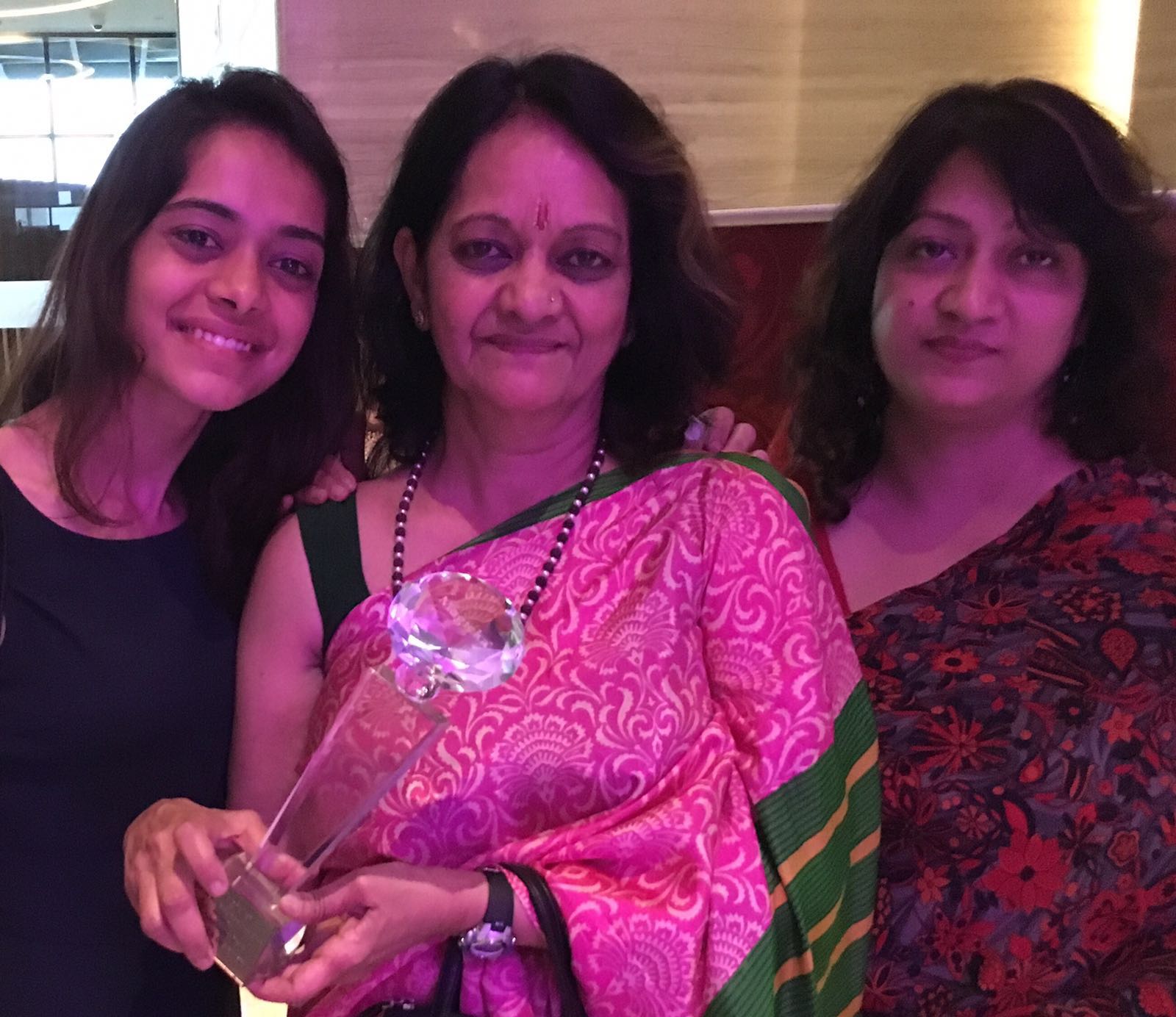
WOMAN ACHIEVER AWARD

To mark International Women's Day, 2016


Our grit is recognized even if our attainment is minuscule.
                                                From left: Dr Rashmi, Self, Dr Monika


Friday, 11 March 2016

INTERNATIONAL WOMEN'S DAY (IWD)

Women of the World Unite
" If you follow all the rules, you miss all the fun" - IWD Quote
Please wear a Purple Ribbon today, 08 March, the International Women's Day (IWD) and take a pledge for 'gender parity,' even though we have to wait for another 118 years to reach it: worldwide it will be, perhaps, reached by 2133.
Much progress has been made since Women's Day 'observance'  in New York on 28 Feb' 1909; since the first IWD was officially recognised in 1911; since the IWD was first held on 08 March in 1914; and since the UN proclaimed March 08 as the 'UN Day for Women's Rights' in 1977
But much more progress remains to be made. While women in Germany and in Britain won their right to vote - women's first demand - in 1918, in Saudi Arabia they received it only last year (2015). Today, only 20% of the Parliamentarians are women; only 17% of cabinet ministers are women; only 19 out of 196 heads of state are women; and only 55 of the World's richest 500 are women. Similar statistics hold in business, academia, administration and other fields.

Let me end on a happy note. On 06 March, our national airline, Air India, flew the world's longest flight by an all-women crew: Delhi - San Francisco. And on IWD, Air India will have 22 all-women flights. Thank You, Air India.


Monday, 22 February 2016

LAST POST

Kisiko reservation chahiye to kisiki ko azadi bhai. Humein kutch nahin chahiye bhai, bas apni razai."
(Some ask for reservation, some ask for independence. I don't want anything, except my quilt.)
A Jat from Haryana and a JNU degree holder.
Captain Pawan Kumar, 23. Died fighting Terrorists at Pampore, J & K, on 20 Feb' 16

Thursday, 18 February 2016

MADAN UTSAV - INDIA'S VALENTINE'S DAY

Kamadeva or Madan,  Hindu's adored God of love, with his consort Rati - the Goddess of passion -  and his friend Basant who provides the perfect whiff of spring for love to blossom, descends to earth on  the fifth day of the shukal paksh of the Hindu month of Magh - the Madan Utsav  Day, on which he is worshipped.
He has a sugarcane bow with a string of honeybees, and floral arrows decorated with five kinds of fragrant flowers.  Anyone struck by his arrow is overwhelmed with love and passion.  We have his temples; we have Kama-sutra a treatise on sex acts inspired by him; and we have loved-places like Khajuraho with erotic carvings that depict the Kama-sutra.
Hindu mythology says that the demon Tarakasur was tormenting the Devtas. Brahma told Kamadeva that only Shiva's son could slay this Demon. Kamdeva then shot Shiva in the heart with his arrow. Shiva was overwhelmed with passion and thus was born Shiva-Parvati's son, Kartikeya, who slew Tarakasur. But Shiva was enraged and burned Kamadeva into ashes with his third eye. At Parvati's urging Shiva gave life back to Kamadeva but without a physical form, a body. Since that day, Kamadeva, known as Atanu - the one without a body - roams the world without a body.
This year Madan Utsav fell on St. Valentine's Day. Hence the question: shouldn't Madan Utsav be the Valentine's Day in India?  
Having Madan Utav as the Valentine's Day will placate the Rightists and the Leftists, both violently opposed to Valentine's Day. Rightists say it is West's attack on Indian culture. They threaten violence on practitioners of Valentine's day and its facilitators like shops selling Valentine's cards and gifts. And not empty threats either: they have caught couples roaming in the parks and cut off their hair or shaved their heads, blackened their faces, and threatened that the girl will be forced to either marry the boy or tie a Rakhi on his wrist; and they have ransacked the offending shops and burned cards and gifts. Shiva Sena is in the lead in this campaign closely followed by VHP, Bajrang Dal, Sri Ram Sena, ABVP, Students Islamic Organisation of India, Hindu Munnani, Hindu Mahasabha and Hindu Makkal Katchi.
To the Leftists, Valentine's Day  is a front for "Western imperialism," "neo-colonialism," "the exploitation of working classes through commercialism by multinational corporations;" it disconnects the working classes, and rural poor, socially, politically, and geographically from the hegemonic capitalist power structure.
Valentine's Day remains a middle class affair; the lower economic class, the vote bank, remains untouched by it. Hence the zeal of the Rightists and the Leftists to climb aboard the anti-Valentine bandwagon.
How did this Western 'virus' catch on in India? Since the Middle Ages till the 1990s, public display of sexual affection was frowned upon, forbidden. But  with the economic liberalisation emerged a new middle class, with access to foreign TV channels and publications and dating sites, and TV channels, such as MTV, with dedicated radio programs and love letter competitions. Living away from families, gave the young, especially the women, a choice in relationship. And so Valentine's day became popular among this class. An opportunity that was exploited and promoted by the commercial establishments: Valentine's Day is a $20 billion plus business worldwide.
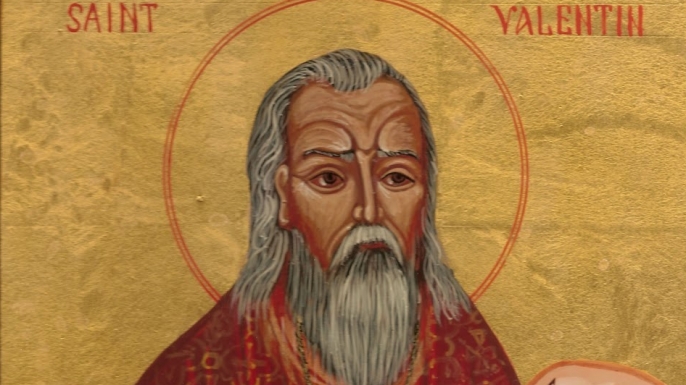
St Valentine's day was a day of sacrifice, not a day of romance, since its origin in 5th century till Chaucer in his poem Parlement of Foules (1382) linked it to romance. He wrote: For this was on seynt Volantynys day, Whan euery bryd comyth there to chese his make ["For this was on St. Valentine's Day, when every bird cometh there to choose his mate."]. French Duke of Orleans’ poem to his wife in 1415, “I am already sick of love, My very gentle Valentine.” And in Shakespeare's Hamlet (17th century) Ophelia sings, “Tomorrow is Saint Valentine’s day, All in the morning be time, And I a maid at your window, To be your Valentine.”
Valentine was a priest and a physician in third century Rome when Emperor Claudius II outlawed marriage for young men because single men made better soldiers than those with wives and families. Valentine saw  the injustice of the decree and performed marriages for young lovers in secret. He also helped Christians escape Roman prisons where they were often beaten and tortured. When His acts were discovered, Claudius had him executed. While in prison, Valentine healed Julia, the blind daughter of his jailer Asterius, and perhaps fell in love with her. Before his death, he wrote her a letter signed, “From your Valentine,” an expression that is still in use today. Thus his appeal as a sympathetic, heroic and – most importantly – romantic figure.
February 14 was declared St. Valentine’s Day at the end of the 5th century by Pope Gelasius. That may have been the day in CE 273 when Valentine died, or was buried. But more likely the Pope did it to “Christianize” the pagan celebration of Lupercalia, a Roman ritual of fertility and purification,  celebrated at the ides of February, or February 15.
Valentine's day remained a celebration of sacrifice till the 14th century when Chaucer first linked it to romance. Its popularity as a day of romance began to become widespread from around the 17th century. By the middle of the 18th, it was common for friends and lovers of all social classes to exchange small tokens of affection or handwritten notes, and by 1900 printed cards began to replace written letters.
And by 1990s it came, or rather, began to become popular, among the middle class in India.

                                                             KAMADEVA also called MADAN

                                                                           KHAJURAHO

                                                                           KHAJURAHO
                                                                           
                                                                               KHAJURAHO

ST. VALENTINE

Thursday, 21 January 2016

EXODUS-13

The 26th anniversary, 19 Jan, of Kashmiri Pundits banishment from their homeland has gone by without a ripple in public conscience. A culture with 5000 years of history is at the brink of extinction but we have not a single tear to shed for them.
This is not the first time the Pundits have faced terror and persecution in their homeland. Six hundred years ago Sikandar Butshikan (1389–1413), the seventh Muslim ruler in Kashmir, unleashed a reign of terror and persecution of non-Muslims, destruction of their symbols and temples and their forced conversions to Islam that forced them to flee – turning the valley, till then a non-Muslim majority region, into a predominantly Muslim region.
The Muslim riots of 1948 forced the Pundits to flee their homeland yet again, an emigration that continued, so that they were reduced from 23.72% of population in 1901 to 4% of the population in 2003. By 2010, the Pundits in the Kashmir Valley were reduced to 808 families, 3,445 persons; 150 -300,000 Pundits had been forced to flee and were scattered around the country, mostly in refugee camps in Jammu and in NCR. Attempts to return them to their homeland were only a pretense. Result: as of October 2015, only one Pundit family had returned to the Kashmir valley since 1990.
 al-Qiyāmah, the Qiyamat (End time), arrived for the Kashmiri Pundits on 19 Jan 1990. It had begun some time ago with two local newspapers asking the Hindus to pack-up and leave; with walls plastered with posters and handbills ordering all Kashmiris to strictly follow the Islamic dress code, to re-set their watches and clocks to Pakistan Standard Time, prohibiting the sale and consumption of alcoholic drinks and imposing a ban on video parlours and cinemas. Masked men with Kalashnikovs were out on the streets to enforce the edict.
As the freezing-cold morning of 19 Jan 90 dawned, three taped-slogans were incessantly played from mosques: 'Kashmir mei agar rehna hai, Allah-O-Akbar kehna hai' (If you want to stay in Kashmir, you have to say Allah-O-Akbar); 'Yahan kya chalega, Nizam-e-Mustafa' (What do we want here? Rule of Shariah); 'Be one with us, run, or die!The slogans reverberated throughout the night.

Massive crowds assembled in mosques across the valley, shouting anti-India, anti-Pundit slogans. Masked men ran amok, waving Kalashnikovs, shooting to kill, shouting anti-India slogans, terrorising cowering Pundits who locked themselves in their homes; shops, business establishments and homes of Pundits were marked out, notices  pasted on them: you have 24 hours to “Be one with us, run, or die!" The air reverberated with Ralive, Tsaliv ya Galive (either convert to Islam, leave the land, or die).” The ominous threats became louder and shriller by the hour.

The pundit fearfully recalled that Justice N K Ganju of the Srinagar high court was shot dead; Pandit Sarwanand Premi, 80-year-old poet, and his son were kidnapped, tortured, their eyes gouged out, and hanged; Ms Bhat, a Kashmiri Pundit nurse working at the Soura Medical College Hospital in Srinagar, was gang-raped and then beaten to death; another Pundit woman was abducted, raped and sliced into bits and pieces at a sawmill; Baldev Raj Dutta, was kidnapped, brutally tortured and killed. And many other episodes of brutality and rape and killing.
As the night wore, gloom turned into despair. The only way to save their lives and their women’s honor was to run from the rabid jihadists – the Pundits painfully concluded.
And thus began the 13th Exodus in the history of the world. The Exodus of Kashmiri Pundits.
More than 2000 pundits were massacred, their women raped, more than 20,000 of their houses destroyed, 95% of their homes looted. Lakhs of Pundits remain refugees in their own land, living in 8x8 tents in refugee camps, struggling with stress and disease and poverty and unemployment.
Is the Pundits’ Exodus 'genocide' or 'ethnic cleansing'? No, says the NHRC. The govt holds that the Pundits "migrated on their own" and their “displacement [is] self-imposed.”
Pundits’ epitaph: a Kashmir MLA askes the Pundits to apologize to the Muslims for running away from the massacre!
[Israelis also ought to apologize for running away from the Holocaust]

A REQUIEM FOR PUNDITS

The street is empty
as a monk’s memory,
and faces explode in the flames
like acorns—
and the dead crowd the horizon
and doorways.
No vein can bleed
more than it already has,
no scream will rise
higher than it’s already risen.
Outside they’re blocking the exits
and offering their blessings to the impostor,
praying, petitioning
Almighty God for our deaths.


Wednesday, 13 January 2016

THEORY OF JUSTICE

Forget ‘A Theory of Justice,’ the acclaimed tome of John Rowls. Follow ‘A Radical Theory of Justice,’ the dreaded primer of A. Kejri.

John sees ‘Justice as Fairness;’ Kejri sees ‘justice as parti pris.’

Two axioms from ‘A Radical ’:

-          If a man loses an election, he is a man of no-reputation, ergo, he can’t sue for defamation.
Jaitly lost Amritsar, 2014, ergo, he is a man of no reputation, ergo, he can’t sue for defamation.

Hmmm . . .

Bajpai lost Mathura, 1957, Gwalior (by a huge margin), 1984; Bajpai is a man of no-reputation. Indira G lost Rai Bareilly, 1977; Indira G is a woman of no-reputation. Abraham Lincoln lost every election he fought – eight of them (in one of these he got less than 100 votes) - except for two; Lincoln is not only a man of no-reputation, he is definitely a man of ill-reputation.

Kejri himself lost Varanasi, 2014; ergo Kejri is a man of no-reputation.

-          You sue everyone or you sue none. Jaitly didn’t sue Kirti Azad, ergo, he didn’t sue everyone, ergo, he can sue none, ergo, he can’t sue Kejri for defamation.


Quod Erat Demonstrandum

Tuesday, 12 January 2016

ONE DAY

On a one-day visit to my favorite city of the 1970s, Bengaluru, the first thing I note as I drive from the airport to the city is that the traffic snarls are no worse than in Delhi. But my favorite haunts are an eye of serenity and dignity in the storm of bevy and traffic. Just as they were four decades ago.
My first port of call is The Bangalore Club. As I enter I see - as is bound to happen in clubs that have a waiting period of 30-40 years for membership – the list of defaulters – those who have not paid their bills. The List is headed by none other than Winston Churchill, Esq, owing the club the princely sum, those days, of Rs 13. That must be 1898 when he was posted to Bangalore as a young army officer. The club, started in 1868, was then 30 years old.
Next, to the Bangalore Golf Club. Inaugurated on 24 June 1876, it is the oldest Golf Course anywhere outside the British Isles. Sixty acres of lush green in the heart of the city! Lounging on a vintage rattan cane-chair in The Boulangerie overlooking a wide expanse of green, sipping coffee made from roasted Arabic seeds and munching on the choicest pastries and croissants - a life of luxury, won’t you say?

And then across the road to The Taj West End. Twenty acres of greenery. Sip a drink or two under the 125 year old banyan tree. And then it is back to the airport and to the madness that is Delhi.
Bangalore Club then (1902)

BGC, looking out from The Boulangerie (Main traffic artery, Sanki road, on the right of the fence)

BGC Greens

BGC sunset

Nightfall: The Taj West End

Bangalore Club now